LA's Underground Went Ghost-Mode — And It's Working
LA's warehouse scene is squeezed by enforcement, so promoters went ghost-mode — address-at-the-door parties, text chains, and a sound that hits harder than ever.
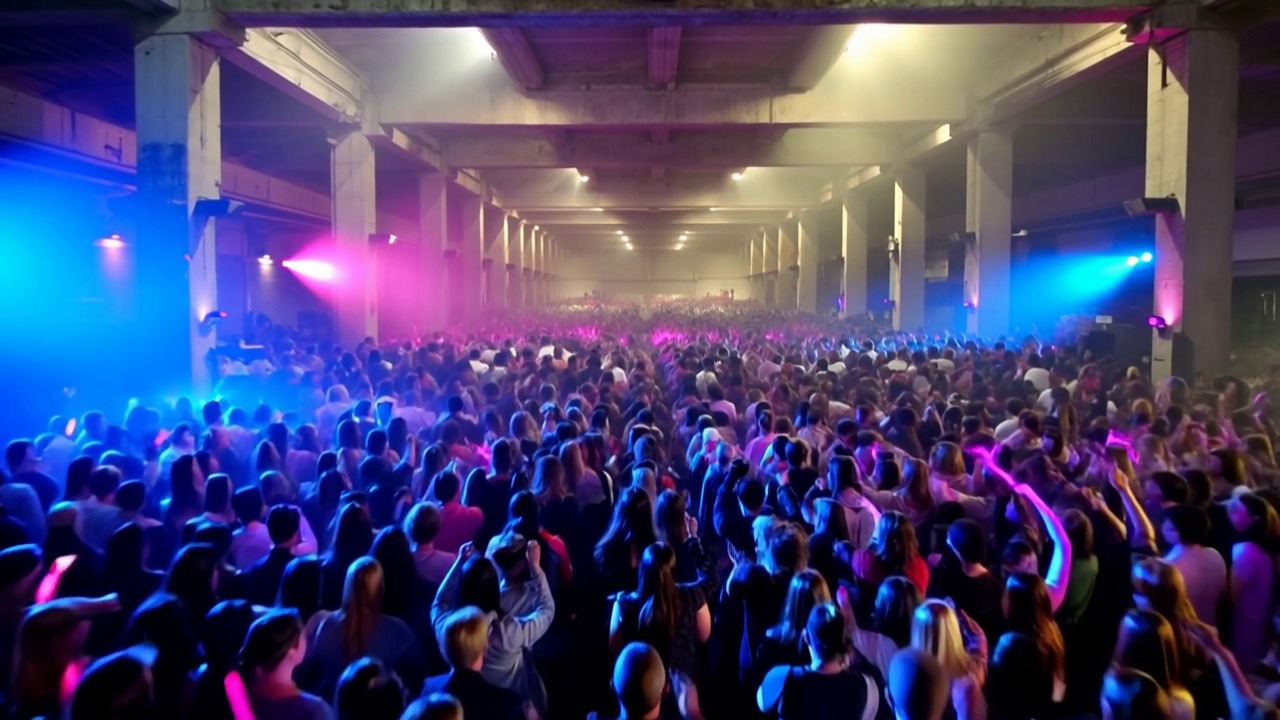
If you've been hitting parties in LA this summer, you already know the new rhythm. The text drops at 8 PM. The address lands at 10. You screenshot it, fire it to the group chat, and you move — because if you blink, the location changes or the whole thing relocates to a slab of concrete somewhere east of the river. Welcome to ghost mode, the city's most effective answer to a scene that keeps getting squeezed.
The Squeeze Is Real
LA's underground has always lived in a gray zone — warehouses, art spaces, and unpermitted rooms that throw parties knowing the clock is ticking. But 2026 has felt different. Between ramped-up code enforcement, noise complaints from rapidly gentrifying neighborhoods, and a city bureaucracy that's grown increasingly hostile to anything without a liquor license and a velvet rope, the spaces that built this culture are under real pressure.
It's not one dramatic bust. It's a slow strangulation. Building inspectors showing up unannounced. Landlords getting cold feet. Insurance premiums that would make a promoter weep. The result? Fewer fixed venues, more uncertainty, and a scene that's had to get creative or die.
Ghost Mode Is the Play
So the scene adapted. The old model — a fixed venue with a monthly party and an Instagram presence — has given way to something more fluid. Promoters are running events where the location isn't revealed until hours before doors. Some use text chains. Others use encrypted group chats. A few have gone fully analog, leaning on word-of-mouth and the kind of loyalty that only comes from years of throwing quality events.
This isn't new technology. It's old-school rave logistics dressed up for 2026. The same blueprint that powered the '90s underground — map points, last-minute locations, trust networks — is back, and it's working because it has to. The difference? Your phone buzzes instead of a pager, and the address comes with a Google Maps pin instead of a hand-drawn map on a flyer.
The Soundtrack to Secrecy
Here's where it gets interesting: the music is shifting too. When you can't rely on a fixed sound system or a known room, the programming changes. We're hearing harder, faster, and weirder sets — industrial techno, gabber-adjacent chaos, and bass-heavy trance that sounds like it was made for concrete floors and portable rigs.
There's a reason for this. When your venue is uncertain and your setup is quick-rig, you lean into music that hits regardless of acoustics. The polished, melodic stuff needs a good room. The hard stuff just needs volume and bodies who came to dance. If you want to dig into the artists shaping this sound, check out our RRU artist roster — we've been booking the exact energy that defines this moment.
Why This Actually Slaps
Nobody's romanticizing enforcement pressure. Losing spaces hurts. Promoters bleeding money on shutdowns is brutal. But there's an undeniable side effect: the scene has gotten tighter, more intentional, and frankly more selective. When you can't just post a flyer and let the algorithm do the work, the people who show up are the people who care.
The parties feel different too. There's a sense of discovery that the fixed-venue era had slowly drained away. You don't know exactly where you're going until you're there. You don't know the full lineup because half of it is “TBA.” You're trading convenience for something that feels like an actual adventure — which is, you know, the entire point of underground dance music. As Resident Advisor's features desk has been tracking, this kind of scene resilience isn't unique to LA — it's playing out in cities worldwide where nightlife faces pressure. But LA's version feels particularly fierce because this city has always had a gift for producing culture under constraint.
The Bigger Picture
None of this is permanent. The underground moves in cycles — crackdowns lead to adaptation, adaptation leads to a new wave of spaces, those spaces get too visible, and the cycle restarts. What's different now is the speed. Social media made it easy for a party to blow up overnight; ghost mode is the counterweight, a deliberate slowing-down, a return to earned knowledge. The city of Los Angeles has also been wrestling with broader nightlife and entertainment policy questions that affect everything from warehouse parties to clubland. The tension between development, noise, and cultural space isn't going away — and the underground is where that tension plays out most vividly.
How to Stay Plugged In
If you're reading this and thinking “how do I get in?” — that's the point. You engage. You show up to the parties that are listed. You meet people. You get on the lists. You take our scene quiz to figure out where your taste fits, and you start building the connections that get you into the rooms that don't get posted.
This is a culture that rewards participation. The text chain doesn't come to you — you go to it, one party at a time, one connection at a time. Check our upcoming events for the ones we can actually list. The rest? You'll have to come find us on the floor.